How Often Should a Grease Trap Be Cleaned in Ontario? The 25 Percent Rule Explained
How often Ontario restaurants must clean a grease trap, the 25 percent rule, trap vs interceptor, city by-laws, records, and who pays in a lease.


If you run a restaurant, a commercial kitchen or a building with food-service tenants, the grease trap is the piece of plumbing most likely to cause you a problem you could have scheduled away. When it is cleaned on time, nobody thinks about it. When it is not, grease gets past it, hardens in the drain line and the municipal sewer, and the result is a backup in the kitchen, a sewer use violation, or a bill from the city for clearing its main.
This guide answers the question every operator and property manager asks: how often does a grease trap need to be cleaned in Ontario? It explains the 25 percent rule, the difference between a grease trap and a grease interceptor, what the by-laws say across Toronto, Kitchener-Waterloo, Cambridge, Guelph, Hamilton and London, what records to keep, and who pays for what when the kitchen is a tenant.
The short answer
There is no single provincial cleaning schedule. The Ontario Building Code requires the interceptor, and your municipality's sewer use by-law sets how it is maintained. The rule most Ontario operators work to is the one Toronto spells out:
Clean the interceptor before grease and solids together reach 25 percent of its liquid volume.
For a small hydromechanical unit under or beside the sink, that usually means every four weeks. Toronto allows up to eight weeks only where your records show the unit stays under 25 percent at four weeks.
For a large in-ground gravity interceptor, Toronto requires vacuuming monthly.
Check it weekly, which the City of Guelph recommends for every food business (City of Guelph).
Busy fryer-heavy kitchens often need more frequent service than that. The 25 percent level, not the calendar, is what decides it.
What is the 25 percent rule?
A grease interceptor works by slowing the kitchen's wastewater down so fats, oils and grease (FOG) float to the top and food solids sink to the bottom, while the cleaner water in the middle flows out to the sewer. As the floating grease layer and the settled solids layer grow, the clear middle zone shrinks. Water moves through faster, has less time to separate, and grease starts leaving with it.
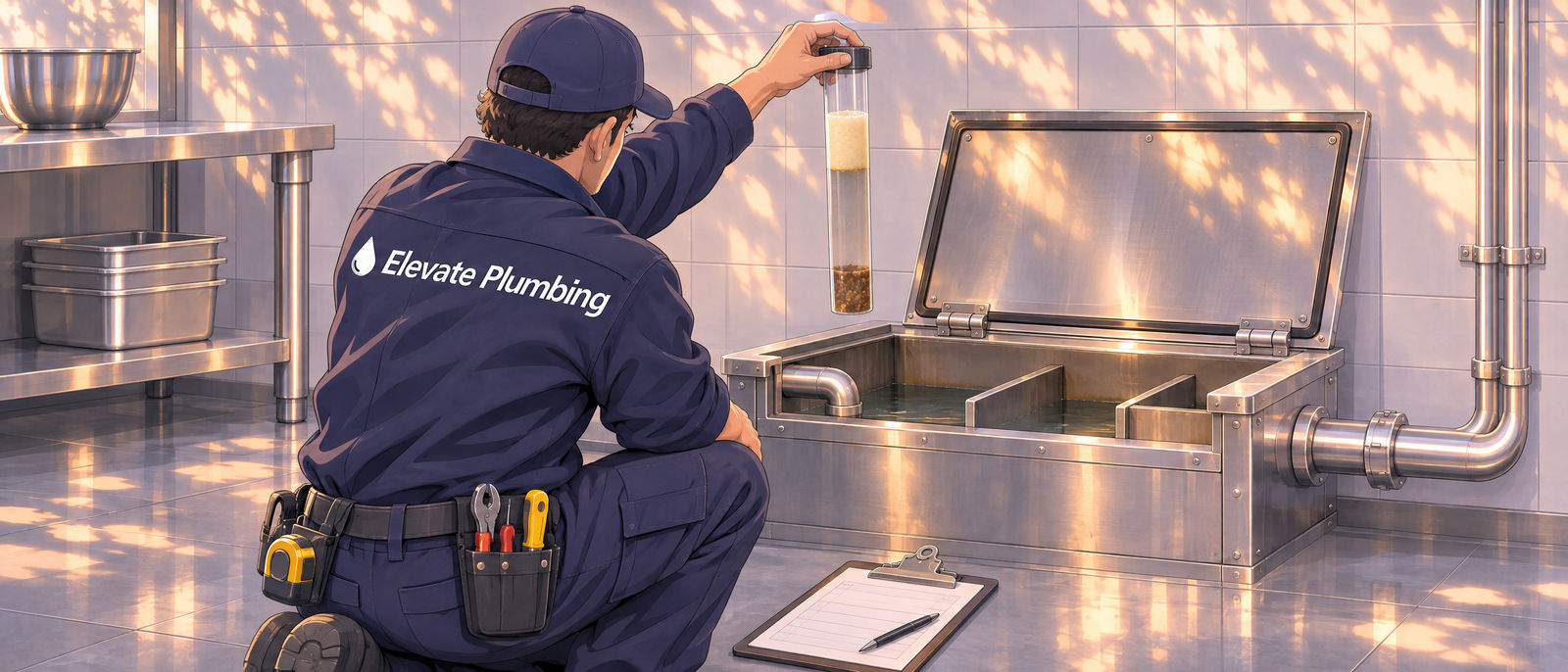
The 25 percent rule sets the service point before that happens. The City of Toronto's code of practice requires the interceptor to be pumped out before grease and solids combined exceed 25 percent of the interceptor's liquid volume, and sets the default service intervals by device type (City of Toronto):
Device | What it is | Toronto service requirement |
|---|---|---|
Hydromechanical interceptor (grease trap) | Compact unit under or beside the sink, rated by flow | Every four weeks, or sooner if grease and solids reach 25 percent. Up to eight weeks if records show less than 25 percent at four weeks |
Gravity grease interceptor | Large in-ground or below-slab tank, sized by volume | Vacuumed monthly, with removable parts fully cleaned |
Grease recovery device | Automatic unit that skims grease into a container | Manufacturer's schedule, with the strainer and grease container emptied daily |
Solids interceptor | Separate strainer ahead of the grease interceptor | Same schedule as the grease interceptor |
To measure the level, open the lid, use a sludge judge or a measuring stick to find the depth of the grease layer and the solids layer, and compare the total to the liquid depth. Record it every time. That record is what lets you justify a longer interval, and it is what an inspector will ask for.
Grease trap vs grease interceptor
The terms are used interchangeably in kitchens, and the trade has largely moved to "hydromechanical" and "gravity" interceptor instead. The difference that matters:
Hydromechanical interceptors (what most people call a grease trap) are small, sit at or near the fixtures, and use internal baffles to separate grease quickly. They are sized by flow rate. Units built to the current standard, CSA B481.1, carry markings for flow rating, removal efficiency, maximum grease capacity and inlet size (City of Toronto). Because they are small, they fill fast and need frequent service.
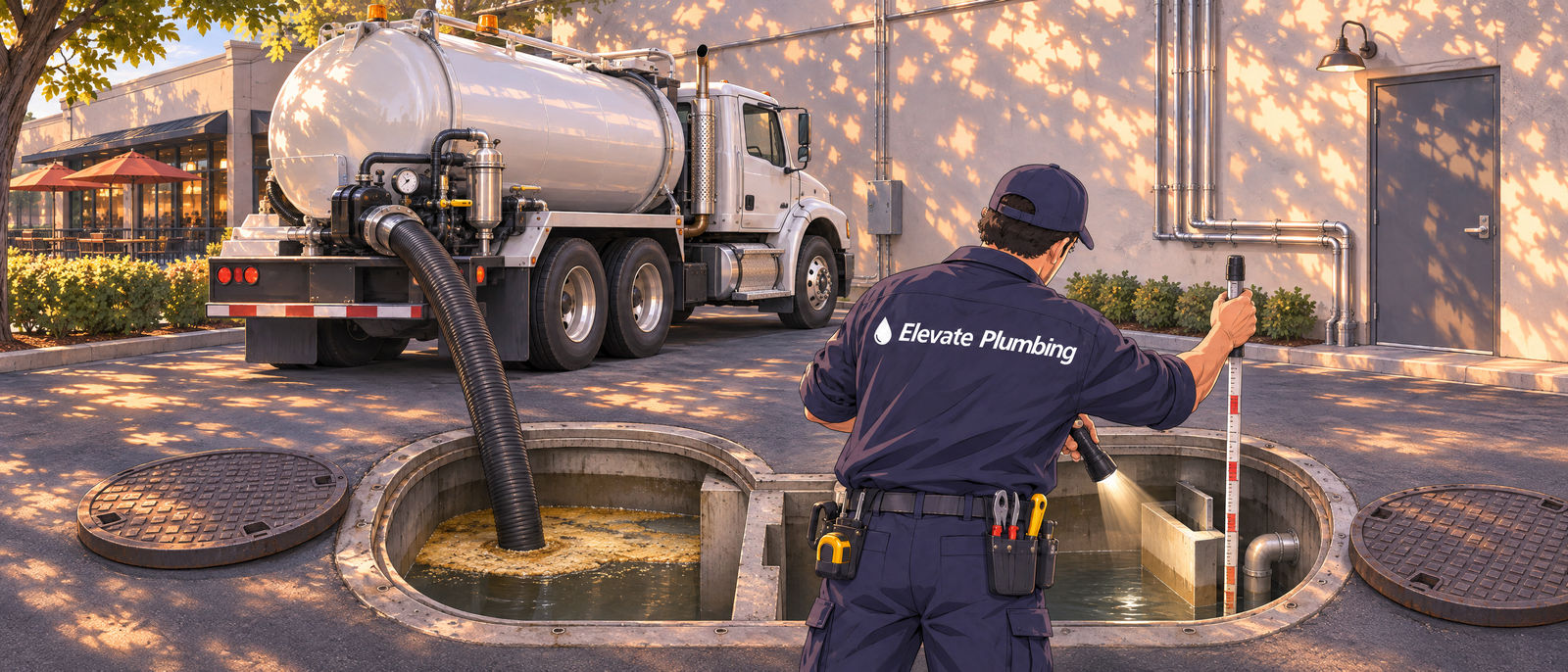
Gravity grease interceptors are large tanks, usually outside or below the slab, that rely on volume and time for separation. They serve bigger kitchens, food courts and buildings with several food tenants. They hold more, so they go longer between pump-outs, but each pump-out is a truck job.
Under the Ontario Building Code, where a grease interceptor is required it must conform to CSA B481.1 or B481.2, and Toronto notes there is no CSA standard for gravity units, which are sized to the Building Code instead. Installing or replacing an interceptor in Toronto needs a building permit.
Do you need a grease interceptor?
If you cook or prepare food commercially, almost certainly. The City of Guelph summarizes it plainly: a grease trap is required under the Ontario Building Code for businesses that cook or prepare food, and it must be sized, installed and maintained to the CSA standard. Toronto's Sewers By-law goes further and requires every food service establishment to install, operate and maintain a grease interceptor on any pipe that connects directly or indirectly to the sanitary sewer.
That covers restaurants and takeout, cafés, bakeries, institutional kitchens in schools, hospitals and seniors' residences, convenience stores and gas stations with hot food, catering kitchens and ghost kitchens. If you are taking over a space that used to be retail or an office, assume you will need one and get it sized before the fit-out plans are final.
What the by-laws say across the service area
Each municipality sets its own sewer use rules. Here is what the main markets in Southwestern Ontario and the GTA publish, and where to look for the rest.
Municipality | Governing rule | What it says about grease |
|---|---|---|
Toronto | Sewers By-law, Municipal Code Chapter 681, and the Food Service Establishment Environmental Code of Practice | Interceptor required on every food service connection. 25 percent rule, four-week default for hydromechanical units, monthly for gravity. Records kept on site for at least seven years. City may bill the establishment for sewer blockage repairs |
Kitchener, Waterloo, Cambridge | Region of Waterloo Sewer Use By-law 21-036 | Businesses discharging fat, oil and grease must comply with the by-law and apply for a permit (Region of Waterloo). Your permit sets the conditions for your site |
Guelph | Ontario Building Code plus the City's Sewer Use By-law, updated in 2024 | Grease trap required for food businesses, sized, installed and maintained to the CSA standard. Check weekly and keep records of every cleaning |
Hamilton | Sewer Use By-law 14-090 | Sets discharge limits for commercial users. Confirm grease interceptor conditions with Hamilton Water for your site |
London | Wastewater and Stormwater By-law WM-28 | Governs discharges to London's sewers. Confirm grease interceptor conditions with the City for your site |
If your kitchen is outside these cities, the pattern is the same: the Building Code requires the interceptor, the local sewer use by-law controls what leaves it, and the safest operating rule is the 25 percent level with weekly checks.
A grease trap maintenance calendar
Frequency | Task | Who |
|---|---|---|
Daily | Scrape plates and pans into the bin before washing. Empty sink strainers. Empty the grease container on an automatic recovery device | Kitchen staff |
Weekly | Open the trap, measure grease and solids depth, record it. Check floor drains and floor sinks for slow draining | Kitchen manager |
Every 4 weeks, or at 25 percent | Full clean-out of hydromechanical units: remove grease and solids, scrape baffles, check the gasket and lid | Licensed hauler or trained staff, per your by-law |
Monthly | Pump-out of gravity interceptors | Licensed liquid waste hauler |
Annually, or more often for fryer-heavy kitchens | Jet or cable the kitchen drain line from the fixtures to the interceptor and on to the main. Camera inspect the line, inspect the interceptor for corrosion, cracked baffles and failing seals, and review the cleaning log | Plumber |
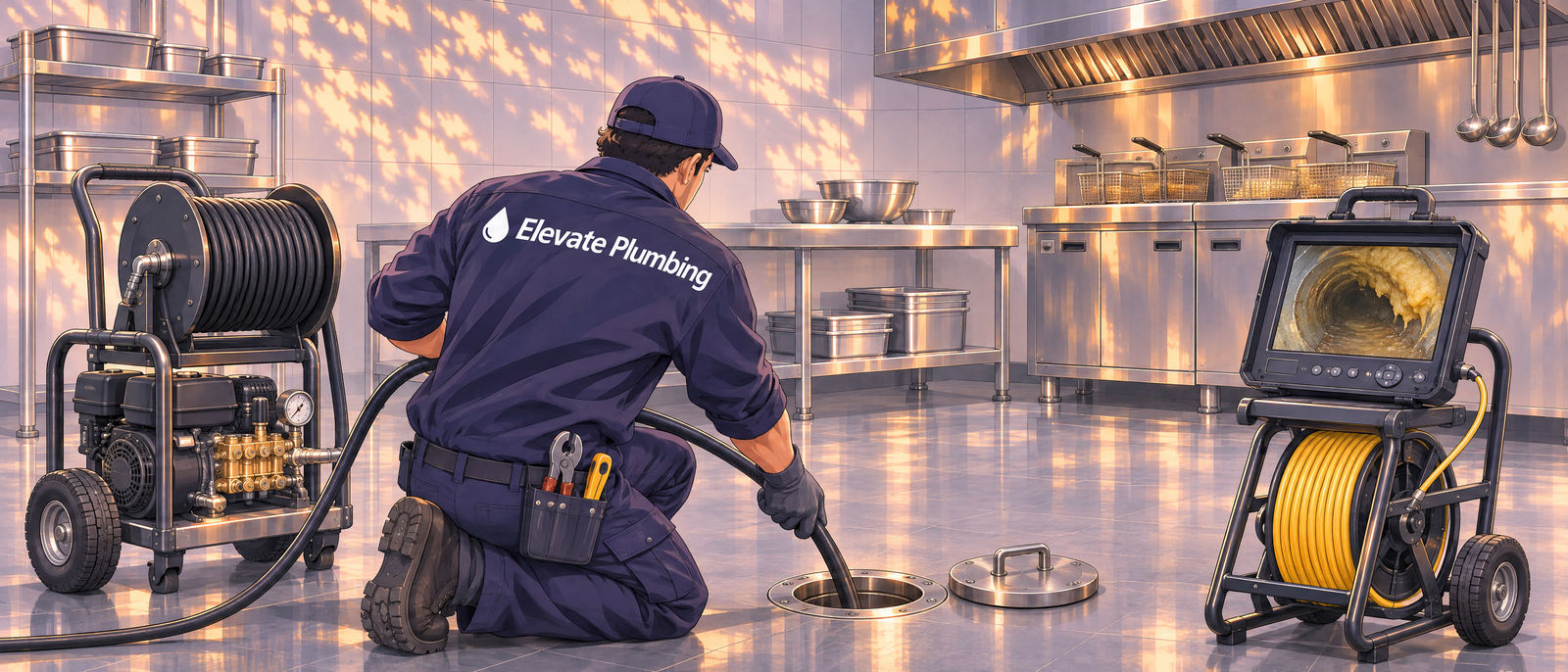
The drain line work is the part most kitchens skip. Even with a well-maintained trap, grease coats the pipe between the sinks and the interceptor and builds up until the line slows. A scheduled drain cleaning visit costs far less than a Friday-night backup.
What records to keep
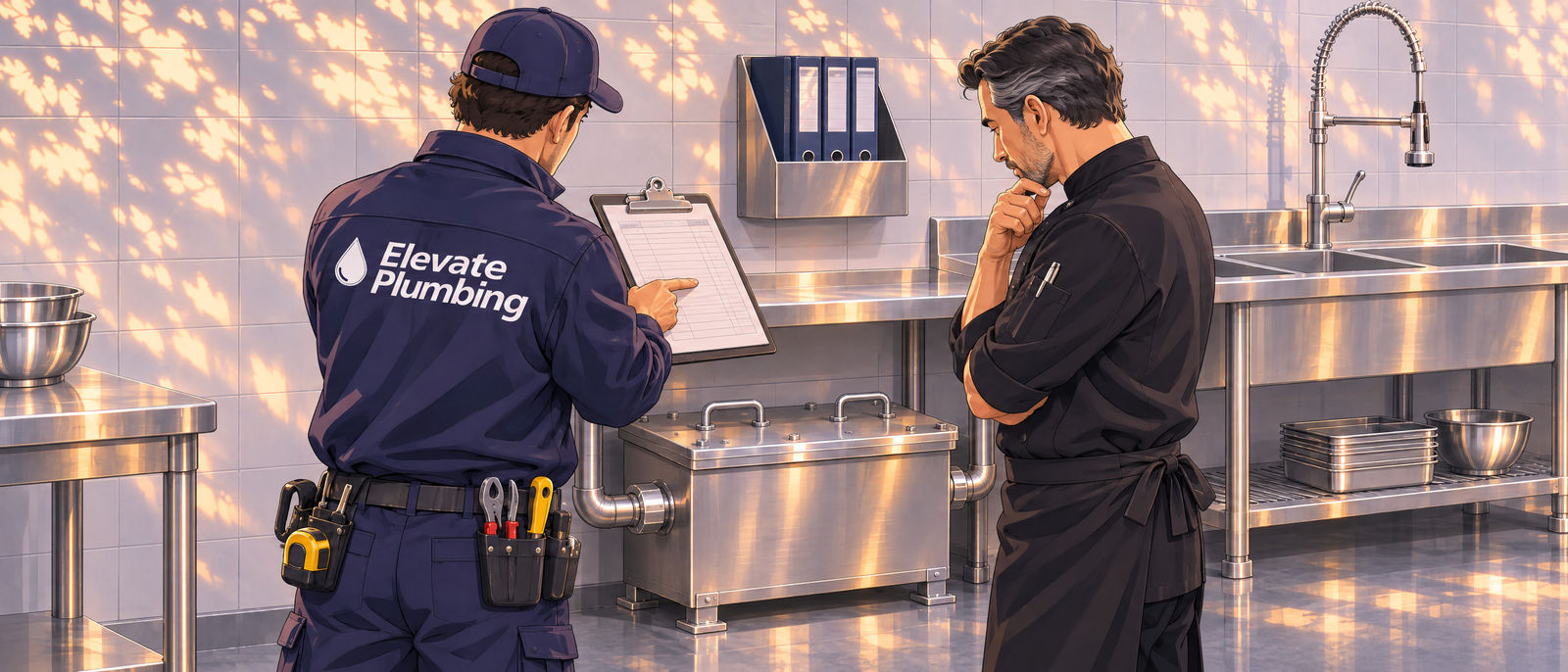
Toronto requires food service establishments to keep accurate, up-to-date records of grease interceptor servicing and off-site disposal, on site, for at least seven years. Service contracts, invoices and receipts all count. Guelph asks operators to keep records of every cleaning, whether staff do it or a waste company does. Even where your by-law is less specific, keep a log with:
Date and time of each inspection and cleaning
Measured grease and solids depth before cleaning
Who did the work: staff name or hauler company
Volume removed and where it was disposed of
Any repairs, damaged baffles or missing parts found
A clean log is your evidence if a sewer blockage is traced back toward your building.
Who is responsible: landlord or tenant?
In a managed building the answer is in the lease, and it is worth reading before there is a problem. The usual split:
The tenant typically handles routine cleaning, the cleaning log and kitchen practices, because the grease comes from their operation.
The landlord typically owns the interceptor as a building fixture, along with the main drain lines, the building sewer and the interceptor's replacement at end of life.
Shared interceptors serving a food court or several units need a written cleaning schedule and cost split. Without one, nobody pumps it until it backs up.
Property managers with food-service tenants should put each interceptor, its size, its location and its cleaning interval on the building's maintenance schedule, the same way they track backflow preventers. Our commercial plumbing maintenance checklist puts grease interceptors on the weekly and quarterly lists, and our guide to backflow testing requirements in Ontario covers the other annual compliance item most kitchens carry.
Grease interceptors and drain lines with Elevate Plumbing
Elevate Plumbing, a division of Elevate Service Group, works on the plumbing around the grease interceptor for restaurants, commercial kitchens and property managers: drain cleaning and jetting of kitchen lines, camera inspection, interceptor installation and replacement sized to the Building Code, and sewer line repair when grease has already done its damage. We work alongside your licensed waste hauler so the pump-out schedule and the line cleaning schedule line up.
The crew is based in New Hamburg and serves Kitchener-Waterloo, Cambridge, Guelph, London, Hamilton, Toronto and the rest of Southwestern Ontario and the GTA. Elevate Service Group's food-service work runs through its sister company TFI Food Equipment Solutions, which supplies and services commercial kitchen equipment, so a multi-site operator can bring the kitchen equipment and the plumbing behind it under one group. For property managers, interceptor and drain line work can sit inside a commercial plumbing maintenance contract.
To book, send us your kitchen layout, interceptor size if you know it, and your municipality through the contact page.
Frequently asked questions
How often does a grease trap need to be cleaned?
Before grease and solids together reach 25 percent of the trap's liquid volume. For a small hydromechanical trap in a busy kitchen that is usually every four weeks or sooner, which is Toronto's default. Large gravity interceptors are pumped monthly in Toronto. Your municipal sewer use by-law or discharge permit sets the rule for your site, so check it.
What is the 25 percent rule for grease traps?
It is the service trigger: clean the interceptor before the floating grease layer and the settled solids layer together take up 25 percent of its liquid depth. Past that point the trap separates less effectively and grease starts passing into the drain line and sewer. Measure the layers weekly and record them.
What is the difference between a grease trap and a grease interceptor?
In everyday use they mean the same thing. Technically, a grease trap is a small hydromechanical interceptor under or beside the sink, sized by flow and certified to CSA B481.1. A gravity grease interceptor is a large in-ground tank sized by volume, serving bigger kitchens or several tenants.
What size grease trap does a restaurant need?
Hydromechanical units are sized by the flow rate of the fixtures draining to them, and gravity interceptors by volume and retention time, under the Ontario Building Code and the CSA B481 standards. The right size depends on your sinks, dishwasher and menu. Have a plumber size it before installation, since an undersized trap fills too fast and an installation or replacement may need a building permit.
How often should a grease trap be inspected?
Weekly, by measuring the grease and solids depth and recording it. The City of Guelph recommends a weekly check for food businesses. Add a professional inspection of the interceptor and the kitchen drain line at least once a year.
Who is responsible for the grease trap, the landlord or the tenant?
The lease decides. Typically the tenant handles routine cleaning and the log, and the landlord owns the interceptor as a fixture, the main lines and replacement. Shared interceptors in food courts or plazas need a written schedule and cost split.
What happens if a restaurant does not clean its grease trap?
Grease passes into the drain line and the municipal sewer, which leads to kitchen backups, odours and sewer blockages. Municipalities inspect food service establishments and can issue orders under their sewer use by-laws, and Toronto can bill an establishment for the cost of repairing a sewer blockage it caused.
Tags:
Author

Elevate Plumbing Team
Elevate Plumbing is a division of Elevate Service Group.
Leave a comment
This will be publicly visible.
Your email address will not be published.
Your comment will be reviewed by an admin before it is published.