Hydro Jetting vs Snaking: Which Drain Cleaning Method Does Your Building Need?
Hydro jetting vs snaking for commercial and multi-unit drains: how each works, when to use which, pipe safety, camera inspection and jetting schedules.


When a drain backs up, the fastest fix is to push a cable through it and get water moving again. That is snaking, and for a single clogged fixture it is often all you need. But in a commercial kitchen, a multi-unit building or a plaza, the same drain can block again a month later, because the snake punched a hole through the blockage and left the rest of it on the pipe wall. That is where hydro jetting comes in.
This guide is for property managers, facility operators and restaurant owners in Ontario who want to know which method their building actually needs. It covers how each method works, when to use which, whether jetting is safe for older pipes, why a camera inspection should come first, and how often commercial lines should be jetted.
The short answer
Snaking is right for a single, recent clog close to a fixture: a toilet, a sink, a shower or a floor drain that stopped working today.
Hydro jetting is right for lines that keep clogging, grease-bearing kitchen lines, main building drains and stacks, scale buildup, and root intrusion in sewer laterals.
A camera inspection decides between them on any main line or recurring problem, and confirms the pipe can take jetting pressure before it starts.
How drain snaking works
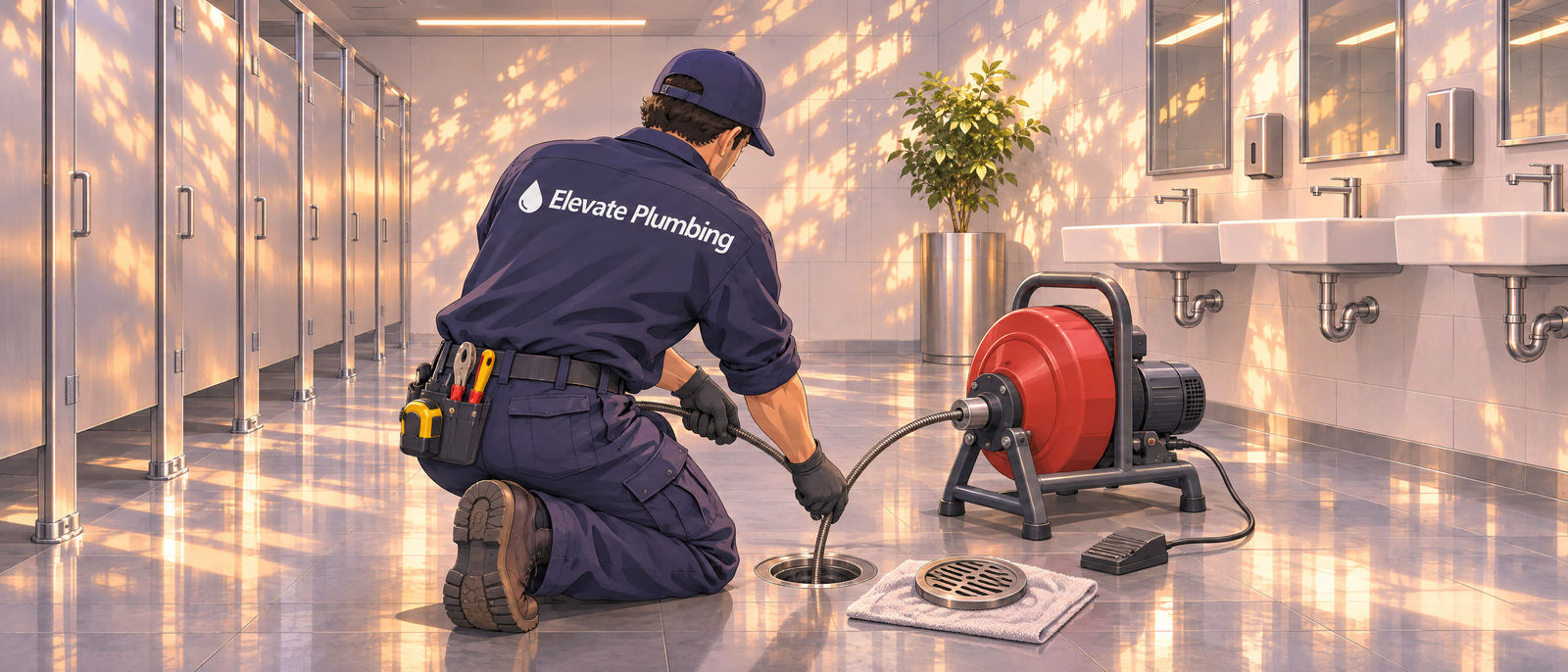
A drain snake, also called a drain auger or cable machine, is a flexible steel cable spun by a motor. The plumber feeds it into the drain through the fixture or a cleanout. A cutting head on the end bores through the blockage or hooks it so it can be pulled back out.
Snaking is fast, uses no water, and works on almost any pipe. Its limit is that it only opens a channel roughly the size of the cutting head. Grease, soap scale and sludge stuck to the rest of the pipe wall stay where they are, and the drain often starts slowing again as new waste catches on what is left.
How hydro jetting works
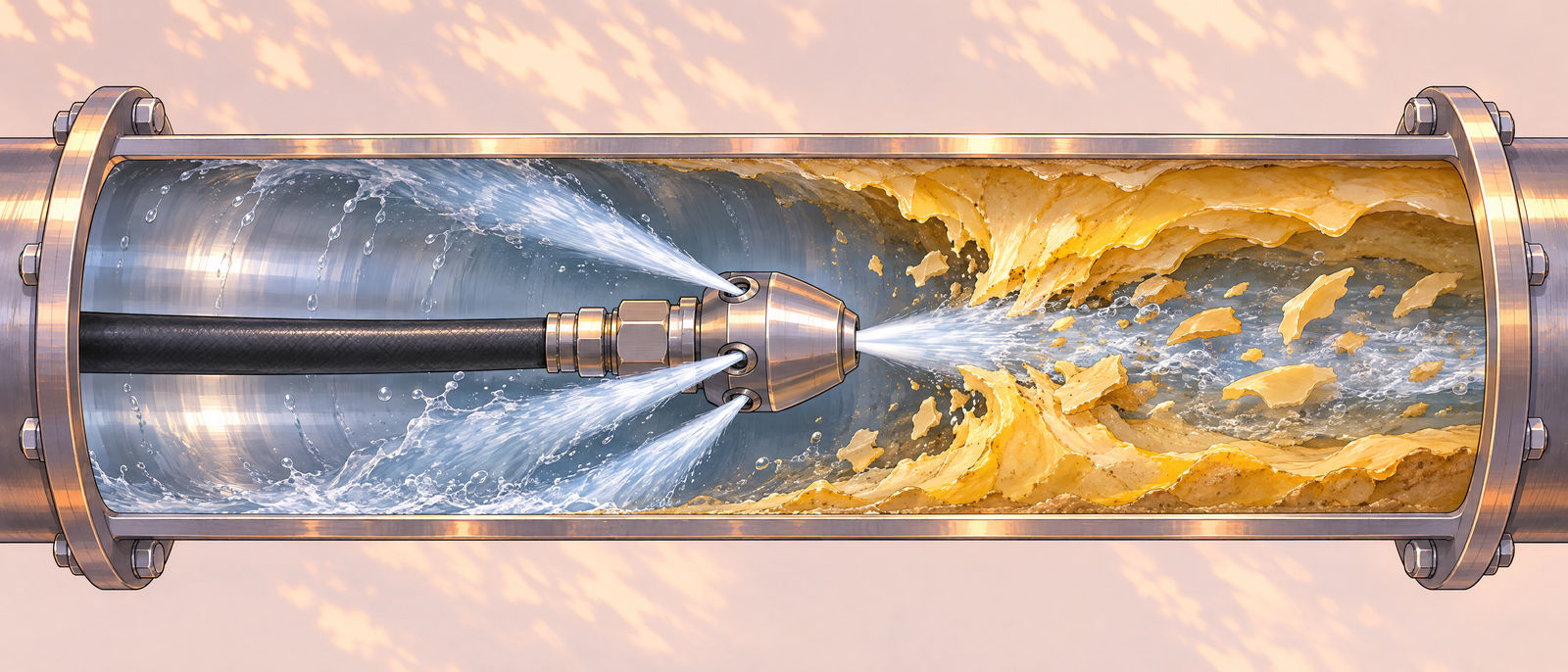
Hydro jetting sends water at high pressure through a hose and a specialized nozzle. Rear-facing jets pull the nozzle up the pipe and scour the full circumference of the pipe wall as it goes, while a forward jet breaks up the blockage ahead. The loosened grease, scale, sludge and fine roots are flushed downstream.
The result is a pipe cleaned close to its original diameter, not just reopened. That is why jetting is the standard method for commercial kitchen lines and for drains that block on a cycle. Nozzles and pressure are matched to the pipe size, material and what is in it.
Hydro jetting vs snaking side by side
Snaking (cable machine) | Hydro jetting | |
|---|---|---|
How it clears | Cutting head bores or hooks through the clog | High-pressure water scours the full pipe wall |
Best for | Single, recent clogs near a fixture | Recurring clogs, grease, scale, sludge, roots, main lines |
What it leaves | Buildup on the pipe walls | A pipe cleaned close to full diameter |
How long the fix lasts | Often short on grease and scale lines | Longer, especially on a maintenance schedule |
Pipe condition needed | Works on most pipes | Pipe must be sound enough for the pressure, so camera first on old lines |
Typical commercial use | Washroom fixtures, tenant sinks, one-off floor drain clogs | Kitchen lines, main building drains, stacks, parking garage drains, laterals |
Is hydro jetting better than snaking?
For grease, scale and recurring blockages, yes. A snake leaves the coating on the pipe walls that caused the clog in the first place, so the line keeps slowing down. Jetting removes it.
For a single clogged toilet or tenant sink, no. Snaking is quicker, uses no water and solves the problem. A good plumber will often do both on a main line: open it with a cable machine to get water flowing, camera inspect it, then jet it clean.
Can hydro jetting damage pipes?
It can, which is why the method has to be matched to the pipe. The National Clay Pipe Institute's position, as reported by Plumber magazine, is that all sewer pipe can be damaged by high-pressure jetting in the wrong hands (Plumber magazine). Sound pipe, used at the right pressure and nozzle, is jetted safely every day. The risk sits with pipe that is already compromised:
Old cast iron with heavy internal corrosion or thin walls, common in older apartment and commercial buildings.
Clay tile laterals with cracked sections, offset joints or missing pieces.
Lines with active breaks or root-damaged joints, where pressurized water can wash out the bedding around the pipe.
Bituminous fibre pipe found in some older laterals, which is soft and can delaminate.
The answer is not to avoid jetting old pipe. It is to look first.
Why a camera inspection comes first
A sewer camera run through the line before jetting shows the pipe material, its condition, any cracks, offsets or sags, and what the blockage actually is. That tells the plumber whether to jet, at what pressure and with which nozzle, or whether the line needs sewer line repair instead of cleaning.
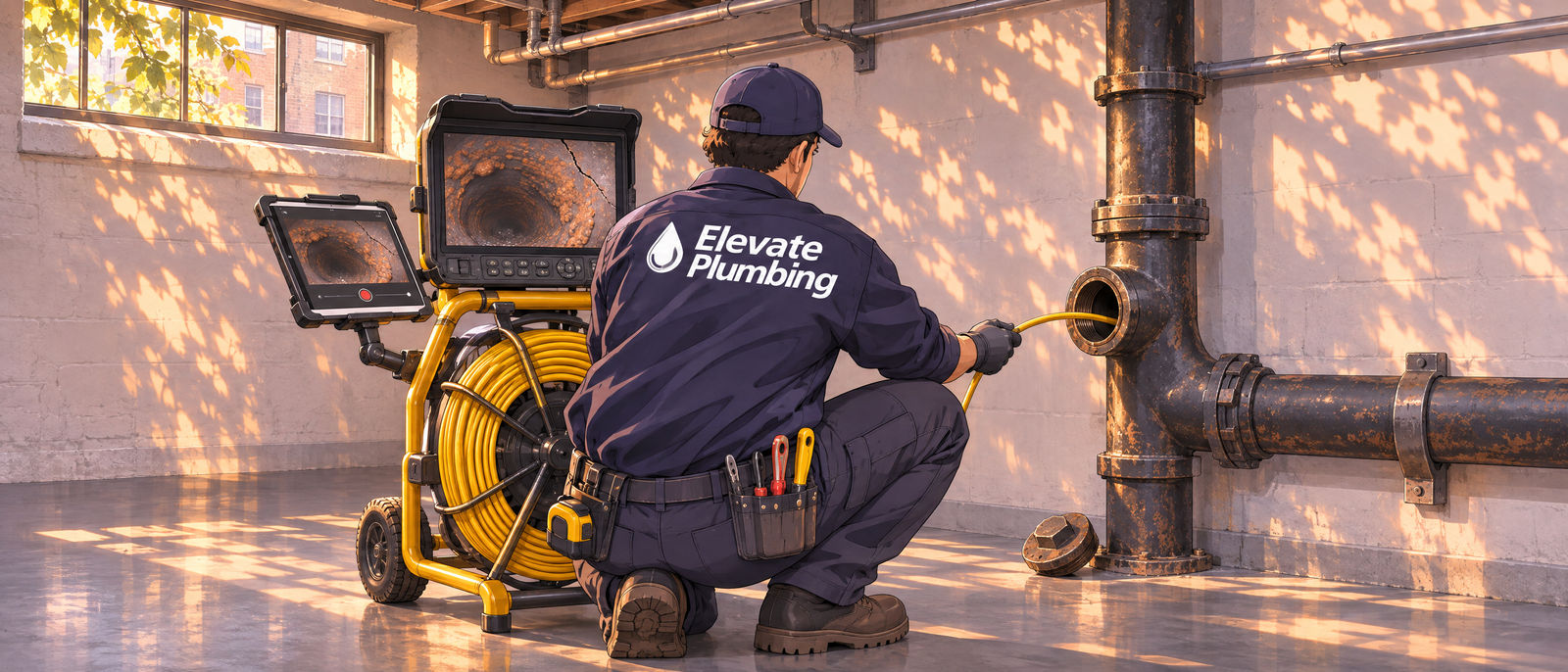
A second camera pass after jetting confirms the line is clean and gives you a recorded baseline of its condition. For property managers, that recording is valuable. It goes in the building file, supports reserve fund planning for older drains, and is evidence if a backup later turns into an insurance or responsibility question, which comes up often in condo plumbing disputes.
Which method fits which building system
Building system | Typical problem | Usual method |
|---|---|---|
Restaurant and commercial kitchen lines | Grease coating the pipe from the sinks and dishwasher to the interceptor | Scheduled hydro jetting |
Line from the grease interceptor to the main | Grease that passed the interceptor | Hydro jetting, timed with interceptor service |
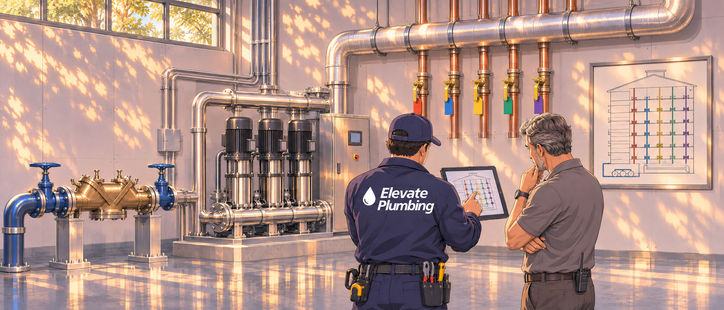
Multi-unit kitchen stacks | Grease and food waste from many suites, backups on lower floors | Hydro jetting from the cleanouts, camera first on cast iron |
Washroom fixtures and tenant sinks | Single clogs, hair, paper, foreign objects | Snaking |
Parking garage and floor drains | Sand, salt, sediment and debris | Hydro jetting |
Sewer laterals to the street | Roots at joints, scale, sags holding water | Camera, then jetting with a root-cutting nozzle, or repair if the pipe is broken |
Storm drains and catch basins on site | Sediment and debris | Hydro jetting |
How often should commercial drains be jetted?
There is no single legal schedule for drain lines. It depends on use. As a starting point:
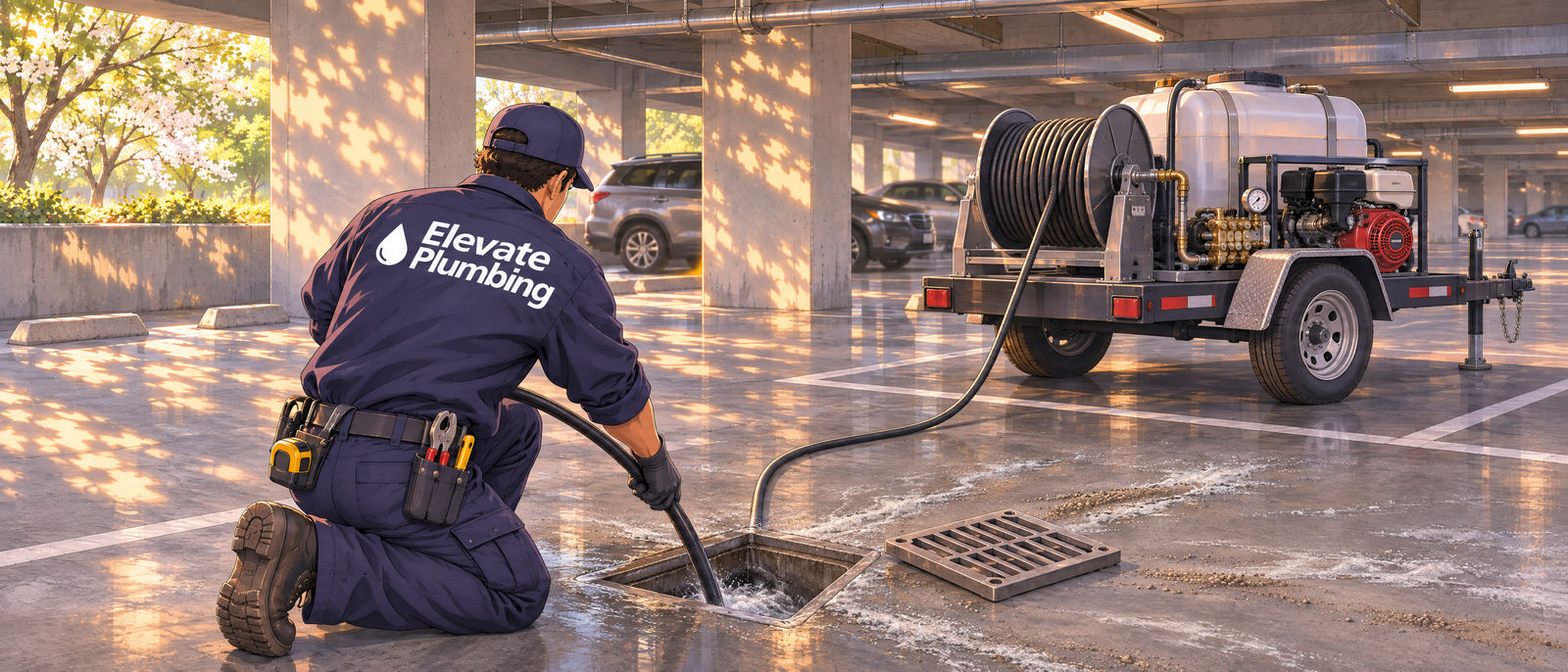
Restaurant and food-service kitchen lines: at least once a year, and more often for high-volume or fryer-heavy kitchens. Time it with grease interceptor service, which in Toronto is every four weeks for most under-sink units. Our guide to grease trap cleaning in Ontario covers the interceptor side.
Multi-unit residential kitchen stacks: on a planned cycle set by the building's history, with lower-floor backups as the warning sign that the cycle is too long.
Main building drains and laterals: after a camera inspection, and on a schedule if roots or scale are found.
Parking garage drains: after the winter, before salt and sand set up in the lines.
The best indicator is the building's own call history. If the same line is snaked more than once or twice a year, it needs jetting and a camera, not another snake. Our commercial plumbing maintenance checklist puts drain line cleaning on the annual schedule alongside the other building items.
Hydro jetting and drain cleaning with Elevate Plumbing
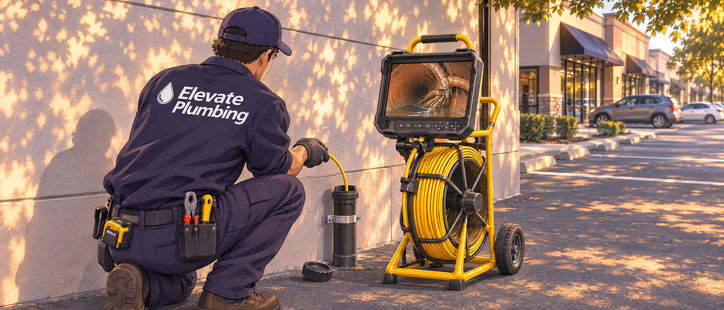
Elevate Plumbing, a division of Elevate Service Group, provides drain cleaning for commercial, multi-unit and food-service properties: cable machines for fixture clogs, hydro jetting for kitchen lines, stacks, main drains and laterals, and camera inspection before and after so you know the condition of the pipe and have the recording for your file. When the camera finds a broken or collapsed section, we quote the sewer line repair on what the footage shows.
The crew is based in New Hamburg and serves Kitchener-Waterloo, Cambridge, Guelph, London, Hamilton, Toronto and the rest of Southwestern Ontario and the GTA. For property managers and restaurant groups, scheduled jetting can sit inside a commercial plumbing maintenance contract, backed by Elevate Service Group's network of more than 130 technicians across plumbing, electrical and facility services.
To book jetting or a camera inspection, tell us the building type, the problem line and how often it has been cleared, through the contact page.
Frequently asked questions
Is hydro jetting better than snaking?
For grease, scale, sludge, roots and drains that keep clogging, yes, because it cleans the full pipe wall instead of punching a hole through the blockage. For a single, recent clog in a toilet or sink, snaking is faster and is usually all that is needed.
What is hydro jetting?
Hydro jetting is a drain cleaning method that sends high-pressure water through a specialized nozzle to scour the inside of a drain or sewer pipe. It removes grease, scale, sludge and fine roots and flushes them downstream, leaving the pipe close to its original diameter.
Can hydro jetting damage pipes?
It can damage pipe that is already compromised, such as heavily corroded cast iron, cracked clay tile or lines with broken joints. Sound pipe jetted at the right pressure is not damaged. A camera inspection before jetting shows the pipe's condition and sets the pressure and nozzle.
Is hydro jetting safe for cast iron pipes?
Usually, if the cast iron is in reasonable condition. Older cast iron with heavy corrosion or thin walls needs a camera inspection first, lower pressure or a different method, and sometimes repair before cleaning.
Does hydro jetting remove tree roots?
Jetting with a root-cutting nozzle can remove fine roots and root hair from a sewer lateral. Large or established roots, or roots that have broken the pipe, usually need mechanical cutting followed by repair of the joint where they got in, or they will grow back.
How often should hydro jetting be done?
For restaurant and commercial kitchen lines, at least once a year and more often for busy kitchens, timed with grease interceptor service. For other building drains, set the schedule from a camera inspection and the line's call history. A line snaked more than once or twice a year is due for jetting.
How long does hydro jetting last?
It depends on what goes down the line. A jetted line that is then maintained on a schedule, with good grease interceptor and kitchen practices, stays clear far longer than a snaked line, which often blocks again as soon as new waste catches on the buildup left behind.
Tags:
Author

Elevate Plumbing Team
Elevate Plumbing is a division of Elevate Service Group.
Leave a comment
This will be publicly visible.
Your email address will not be published.
Your comment will be reviewed by an admin before it is published.