Who Is Responsible for Plumbing in an Ontario Condo? Unit Owner vs Corporation
Who fixes and pays for condo plumbing in Ontario: unit owner vs corporation, leaks from upstairs, insurance deductibles, and what boards should do.


A leak in a condo building almost always starts the same argument: whose pipe is it, and who pays? The owner upstairs says it is a building pipe. The owner downstairs wants their ceiling fixed. The property manager is on the phone with a plumber, an insurer and the board at the same time. Most of that argument is avoidable, because the answer is already written down in the Condominium Act, 1998 and in your building's declaration.
This guide is for condo boards, property managers and superintendents in Ontario, and for owners who want to understand the rules. It covers how plumbing responsibility is usually split, who pays when a leak crosses from one unit to another, how insurance and the deductible work, what to do in the first minutes of a leak, and how boards can take the guesswork out of it. It is general information, not legal advice. Your declaration and by-laws decide the details for your building.
The rule in one sentence
Under the Condominium Act, 1998, the corporation maintains and repairs the common elements, and each owner maintains their own unit, unless the declaration says otherwise (Condominium Act, 1998). Section 90 sets the maintenance duty, section 89 sets the duty to repair after damage, and section 91 lets the declaration move those duties between the corporation and the owners. That last part is why two buildings on the same street can answer the same question differently.
So the first step is always the same: find out where your declaration draws the line between the unit and the common elements. The unit boundary is described in the declaration and the description, often at the unfinished side of the drywall or the centre line of a wall.
Who is typically responsible for which pipes
The table below shows the common split in Ontario condominiums. Treat it as a starting point and check it against your declaration.
Plumbing component | Usually responsible | Why |
|---|---|---|
Main water service, meter, booster pumps, domestic hot water plant | Corporation | Common elements serving the whole building |
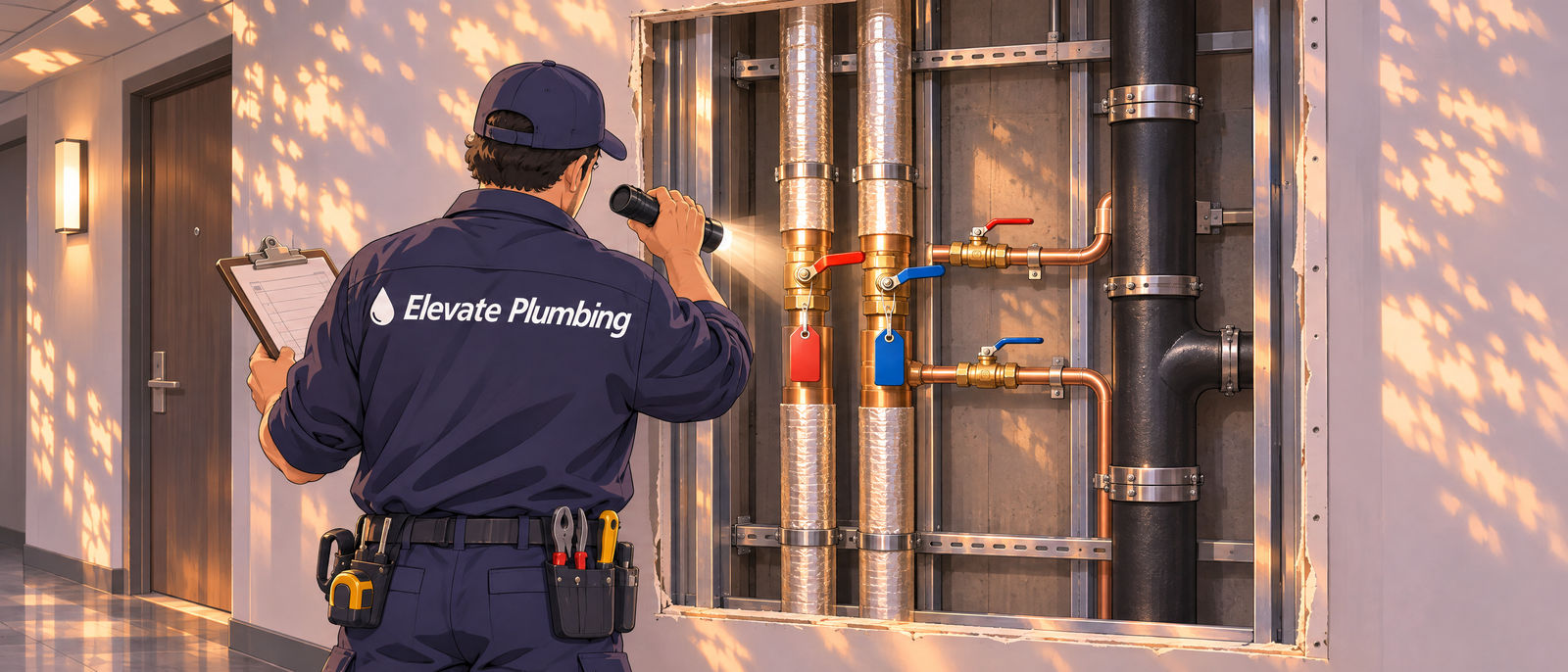
Risers and stacks running between floors | Corporation | Shared pipes, usually inside common element walls or shafts |
Pipes inside exterior walls, demising walls and floor slabs | Corporation, in most declarations | Usually sit outside the unit boundary |
Backflow preventers, sump pumps, sewage ejectors, building drains | Corporation | Building systems, and annual backflow testing is a corporation compliance item |
In-suite shut-off valves | Varies, check the declaration | Some declarations treat them as part of the unit, others as the first piece of the common element supply |
Branch lines inside the unit from the shut-off to the fixtures | Owner, in most declarations | Serve only that unit |
Fixtures, taps, toilets, under-sink traps and supply hoses | Owner | Part of the unit, and replaced at the owner's choice |
Dishwasher, washing machine and fridge water lines | Owner | Appliances and their connections belong to the unit |
In-suite water heater (where the building has them) | Owner, unless rented or listed as common element | Serves one unit |
Upgrades the owner added, such as a new shower system or a relocated sink | Owner | Improvements beyond the standard unit |
Two things change the answer more than anything else. The first is the declaration, which can make owners responsible for pipes inside their walls or make the corporation responsible for in-suite equipment. The second is the cause. Even where a pipe is the corporation's, damage caused by an owner, such as a renovation that nicked a line, can come back to the owner.
Who pays when water leaks from the unit above?
This is the question boards get most. The answer has two layers: who repairs, and who ultimately pays.

Who repairs. Under section 89, the corporation repairs damage to the units and common elements after a loss, up to the level of the standard unit. The standard unit is defined in a by-law or, without one, in the schedule the corporation registered, and it describes the base finishes the corporation restores. Owners are generally responsible for improvements and decorative upgrades above that standard (Condominium Authority of Ontario).
How insurance works. Section 99 requires the corporation to insure the units and common elements against major perils, which includes water escape. The corporation's policy carries a deductible, and in many Ontario buildings that deductible is now large.
Who pays the deductible. By default the deductible is a common expense shared by every owner. Section 105 lets the corporation recover the lesser of the repair cost and the deductible from an owner whose act or omission caused the damage. With a section 105 by-law, the corporation can charge the deductible back to the unit where the leak started, without proving fault. The Divisional Court confirmed in Lozano v. TSCC 1765 that no finding of fault is needed under such a by-law (Miller Thomson).
In practice that means an owner whose dishwasher hose bursts can end up carrying the building's deductible, and their own unit insurance policy is what protects them. Boards should tell owners whether a section 105 by-law is in place and what the deductible is, so owners can buy the right coverage. Owners should ask their insurer specifically about deductible assessment coverage.
The evidence matters. Chargebacks depend on proving where the water came from. A plumber's written report on the source of a leak, with photos, is often the document that settles it.
Do condo fees cover plumbing repairs?
Condo fees fund the corporation's operating budget and reserve fund, which pay for maintaining and repairing the common elements: risers, stacks, the main water service, pumps and the building drains. They do not pay for an owner's in-suite plumbing, fixtures or appliances, unless the declaration says otherwise. Planned work on building plumbing, such as riser replacement, is a reserve fund item and appears in the reserve fund study.
Can the corporation enter a unit for plumbing work?
Yes. Section 19 of the Act lets the corporation, or someone it authorizes, enter a unit at any reasonable time on reasonable notice to carry out its duties, including inspecting and repairing common element pipes. Most declarations also allow immediate entry in an emergency, such as an active leak into the unit below. Owners who refuse entry for necessary plumbing work can end up paying the cost of enforcing it. Check your declaration for the exact entry wording.
The first 10 minutes of a condo leak
For owners, superintendents and on-site staff:
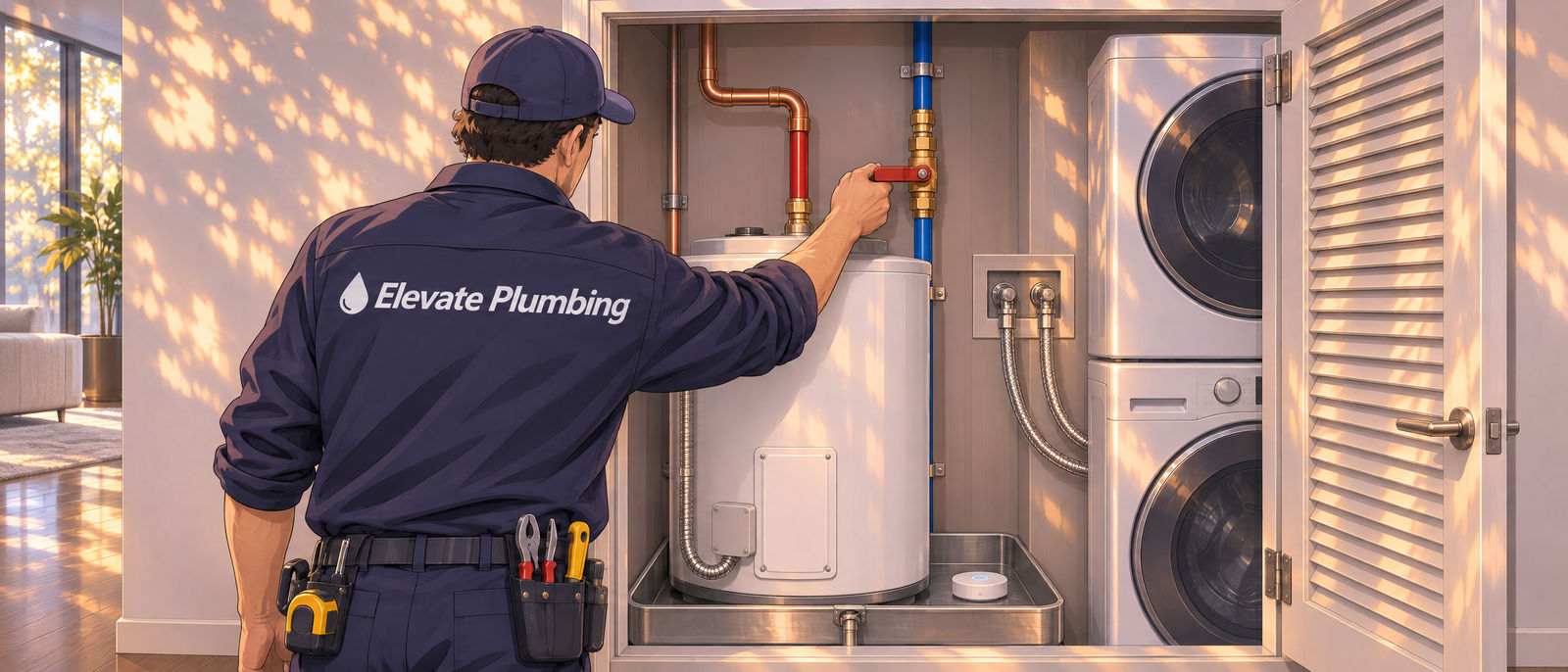
Stop the water. Close the in-suite shut-off valve if the leak is inside the unit, usually found in a utility closet, behind an access panel near the water heater or under the kitchen sink. If the leak is from a riser or you cannot find the valve, call the superintendent or the property manager's emergency line right away so they can isolate the riser.
Protect the units below. Notify the unit underneath and the superintendent. Water travels down through slabs and shafts.
Turn off power to wet areas if water is near outlets, fixtures or panels, and only if it is safe to reach the breaker.
Document everything. Photos and video of the source, the water path and the damage, with the time.
Call a licensed plumber to stop the leak and identify the source in writing. That report decides who is responsible.
Report it to management and your insurer. Owners should notify their own insurer too, even if they think the building is responsible.
Every superintendent should have a map showing which valve isolates which riser and stack. If your building does not have one, it is worth building one before the next leak. Valves that are never exercised seize, which is why our commercial plumbing maintenance checklist puts shut-off valve testing on the quarterly list.
What condo boards can do to reduce the arguments
Most condo plumbing disputes come from three gaps: nobody knows where the line is, nobody knows the condition of the building's pipes, and nobody knows who to call at 2 a.m. Boards can close all three.
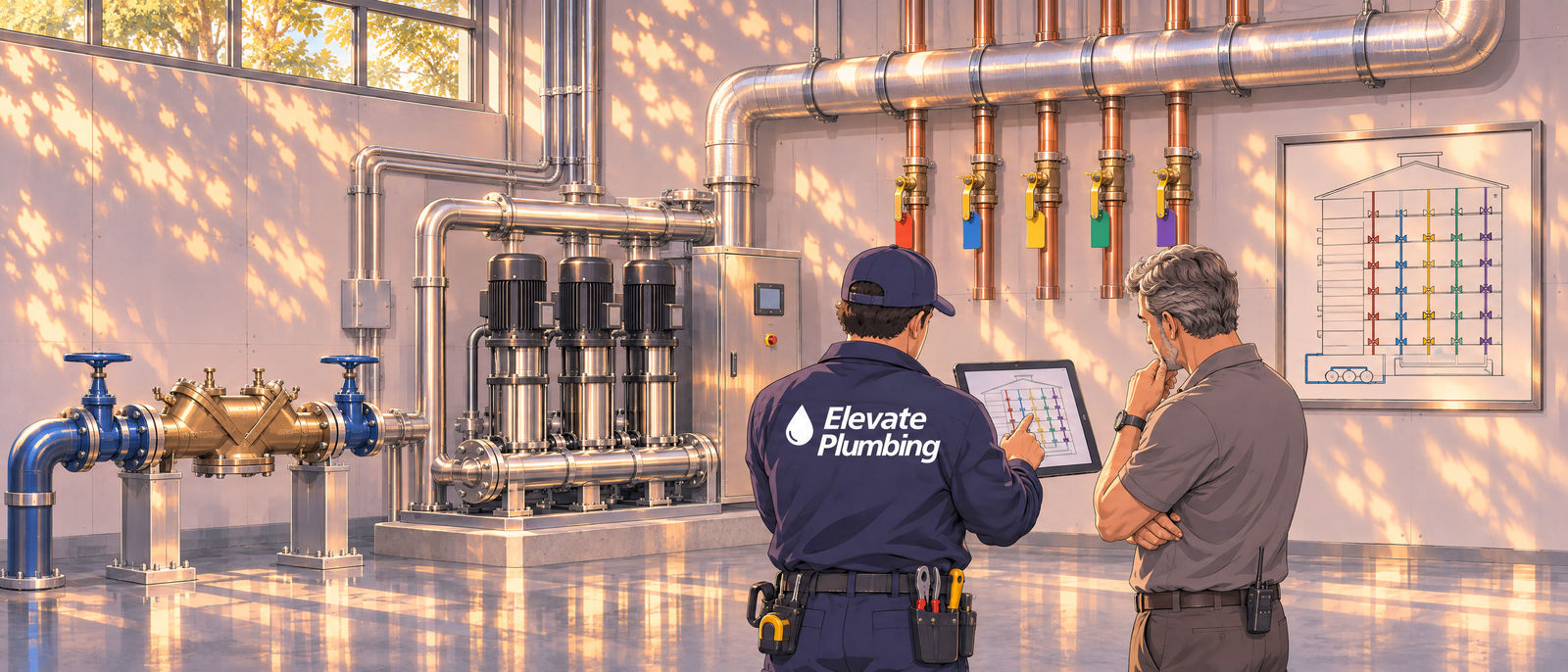
Publish the responsibility split. A one-page summary of the declaration's unit boundary and a version of the table above, sent to every owner and new purchaser, settles most arguments before they start.
Pass or review a section 105 by-law with your condo lawyer, and tell owners what the deductible is.
Require owners to replace high-risk items. Many corporations now require braided stainless supply hoses, water heater replacement by a set age, or leak detectors under in-suite water heaters and washers, through rules or by-laws.
Put building plumbing on a maintenance schedule. Exercise riser valves, inspect stacks in shafts, service sump pumps and sewage ejectors, and keep up the annual backflow testing the municipality requires.
Hold one plumbing contract. A standing agreement with one plumbing contractor for scheduled maintenance and 24/7 emergency response means the superintendent always knows who to call, and the same team builds a record of the building's history.
Condo plumbing with Elevate Plumbing
Elevate Plumbing, a division of Elevate Service Group, works with condo corporations, property managers and multi-unit owners across Kitchener-Waterloo, Cambridge, Guelph, London, Hamilton, Toronto and the rest of Southwestern Ontario and the GTA. The crew is based in New Hamburg.
For boards and managers we provide commercial plumbing maintenance contracts covering risers, stacks, valves, pumps and backflow compliance, 24/7 emergency plumbing for active leaks, and general plumbing repairs in suites when owners need them. After a leak, we put the source in writing, which is the document boards and insurers need. Behind the local crew is Elevate Service Group's network of more than 130 technicians across plumbing, electrical and facility services, so a portfolio of buildings can run through one contract.
To set up a maintenance contract or book a building assessment, contact us through the contact page.
Frequently asked questions
Who is responsible for plumbing in a condo in Ontario?
Under the Condominium Act, 1998, the corporation maintains and repairs the common elements, such as risers, stacks and the main water service, and each owner maintains their unit, including in-suite branch lines, fixtures and appliance connections. The building's declaration can change that split, so it is the document that decides for your building.
Are pipes inside the walls common elements?
Often, but not always. Pipes inside exterior walls, walls between units, floor slabs and shared shafts are usually common elements because they sit outside the unit boundary. Some declarations make owners responsible for pipes inside their unit's walls. Check where your declaration draws the unit boundary.
Who pays for a leak from the unit above?
The corporation generally repairs the damage up to the standard unit, and its insurance covers major water damage. The deductible is a common expense unless the corporation has a section 105 by-law, in which case it can charge the deductible back to the unit where the leak started, even without proof of fault. Owners need their own unit insurance to cover that risk.
Do condo fees cover plumbing repairs?
They cover the common elements, such as risers, stacks, pumps and building drains, through the operating budget and reserve fund. They do not cover an owner's in-suite plumbing, fixtures or appliances unless the declaration says so.
Does condo insurance cover a burst pipe?
The corporation's policy covers damage to the units and common elements from major perils, including water escape, up to the standard unit and subject to its deductible. An owner's own policy covers improvements, contents, and, if they buy it, deductible assessments charged back by the corporation.
Where is the water shut-off valve in a condo unit?
Usually in a utility or mechanical closet, behind an access panel near the in-suite water heater or fan coil, or under the kitchen sink. Some buildings only have riser valves outside the unit, which the superintendent controls. Find yours before you need it, and ask management which riser serves your unit.
Can the condo corporation enter my unit to fix plumbing?
Yes. Section 19 of the Condominium Act lets the corporation enter a unit on reasonable notice to carry out its duties, including repairing common element pipes, and most declarations allow immediate entry in an emergency such as an active leak.
Tags:
Author
Elevate Plumbing Team
Elevate Plumbing is a division of Elevate Service Group.
Leave a comment
This will be publicly visible.
Your email address will not be published.
Your comment will be reviewed by an admin before it is published.