Sewer Camera Inspection for Commercial Buildings: When It Is Worth It and What the Report Shows
When a sewer camera inspection is worth it for commercial and multi-unit buildings, what the report shows, who owns which pipe, and what comes next.


The sewer line is the one piece of building plumbing nobody sees until it fails. It runs under the slab and out under the parking lot to the street, and in many commercial and multi-unit buildings it is the oldest pipe on the property. When it goes wrong, the symptoms show up as backups on the lowest floor, slow drains across several units, odours, or a soft spot in the pavement, and by then the repair is rarely small.
A sewer camera inspection lets you see the line before that happens. This guide is for property managers, commercial owners, condo boards and businesses signing a lease in Ontario. It covers what a sewer camera inspection is, when it is worth it in a commercial building, what the report shows, who owns which section of the pipe, and what to do with the findings.
What is a sewer camera inspection?
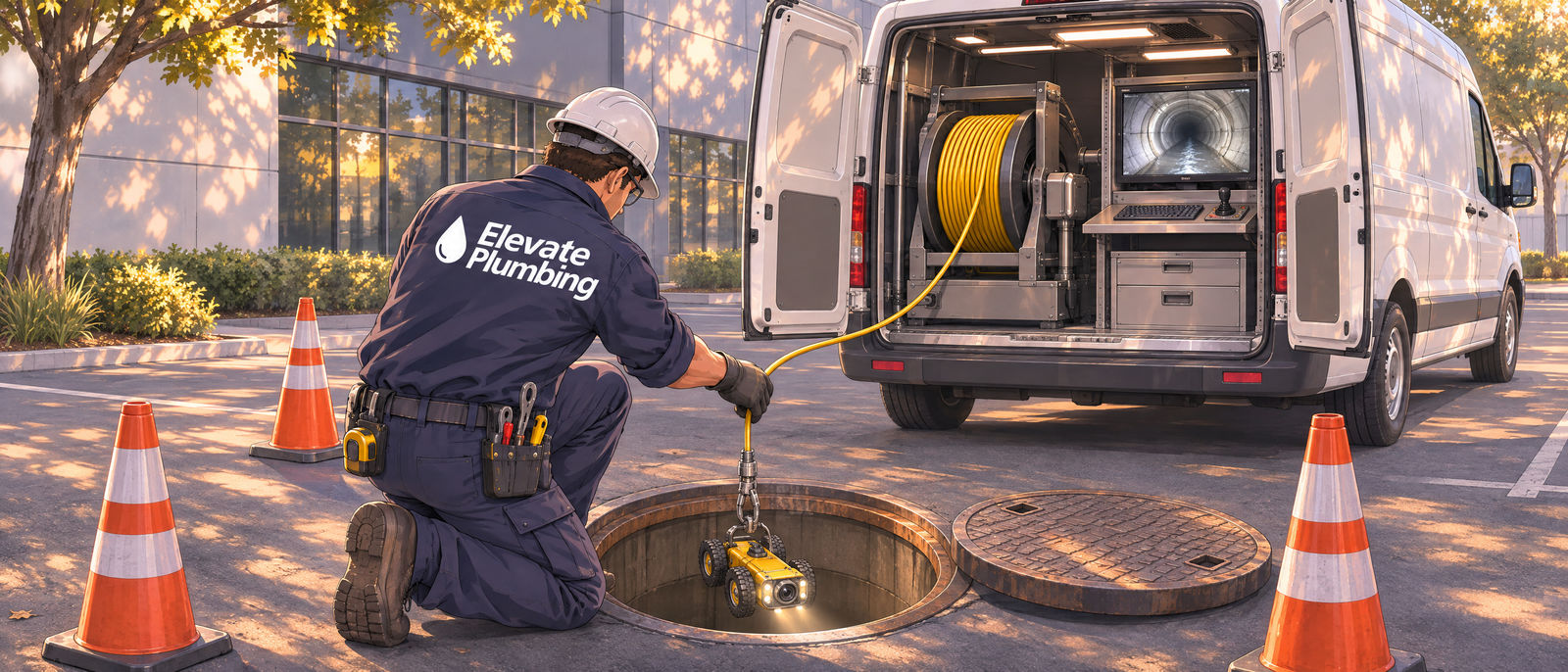
A plumber feeds a waterproof camera on a flexible push cable, or on a self-propelled crawler for larger mains, into the building drain through a cleanout. The camera records video of the inside of the pipe as it travels toward the street. A transmitter in the camera head, called a sonde, lets the plumber locate the camera from the surface with a receiver, so any defect can be marked on the ground with its distance from the cleanout and its depth.
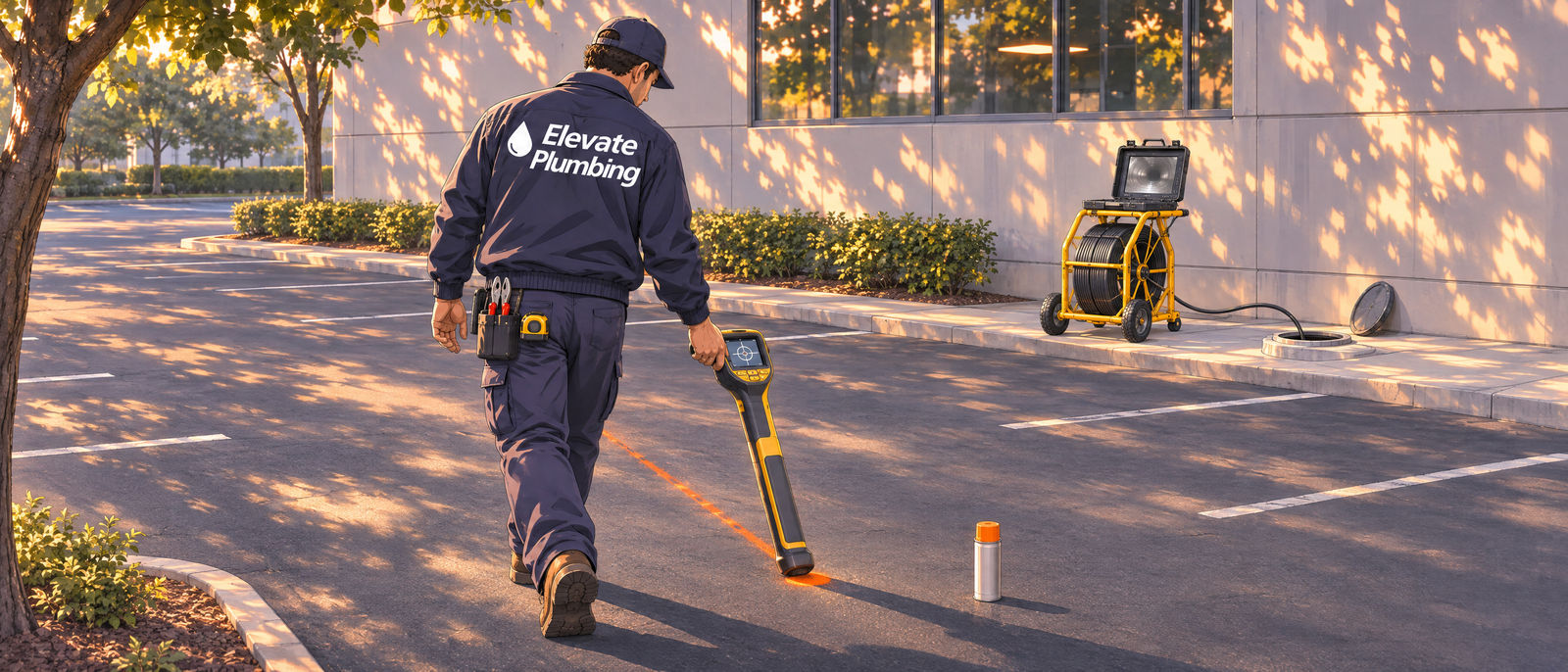
The result is a recording of the full line, a written report of what was found and where, and markings on the ground over any problem. It is the only way to know the condition of a buried sewer line without digging it up.
Is a sewer camera inspection worth it?
In a commercial or multi-unit building, almost always when one of these applies:
Before you sign a lease or buy a building. Restaurants, laundromats, salons and any tenant with heavy drain use should know the condition of the line they are taking on, and who pays if it fails. For a purchase, it belongs in due diligence beside the roof and mechanical reports.
When the same line keeps backing up. A drain cleared more than once or twice a year has a cause the snake is not fixing: roots, a sag that holds water, scale, grease or a broken section.
Before and after jetting. A camera pass before hydro jetting shows whether old cast iron or clay can take the pressure. A pass after confirms the line is clean and records its condition.
When a tenant changes use. A retail unit becoming a restaurant changes the load on the line. Check it, and the grease interceptor arrangement, before fit-out. Our guide to grease interceptor sizing covers the interceptor side.
Before paving, landscaping or building over the line. Replacing a sewer before new asphalt costs far less than cutting new asphalt to replace it later.
After a flood or sewer backup. To find the cause, and to give the insurer and, in a condo, the board the evidence they need. See backwater valves vs backflow preventers vs sump pumps for the protection side.
For capital planning. Condominium corporations update their reserve fund study on a regular cycle under the Condominium Act. A recorded inspection of the building drains gives the reserve fund planner real condition data instead of an age-based guess.
What a sewer camera inspection report shows
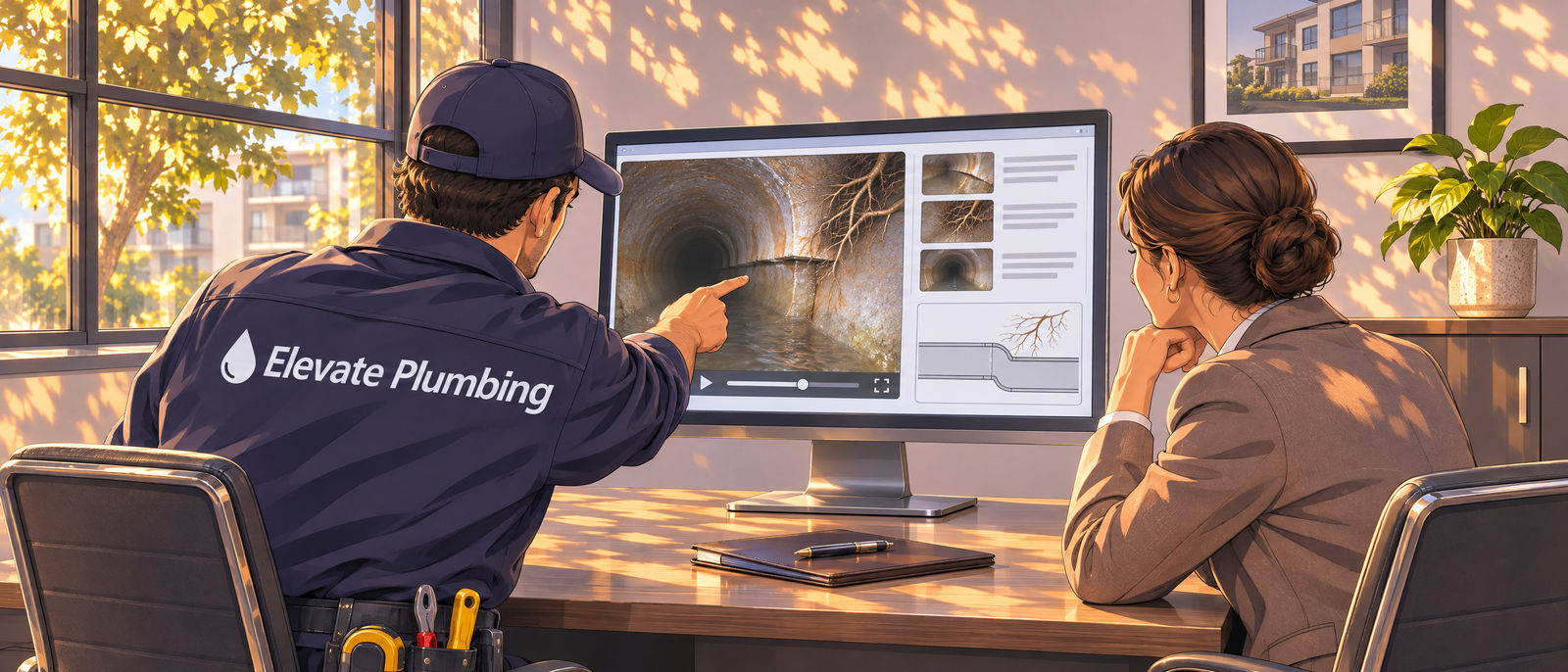
A good report lists every observation with its distance from the starting point, so it can be found again. Common findings:
Finding | What it looks like | What it usually means |
|---|---|---|
Roots | Fine hair roots or thick masses at joints | Roots entering through a joint or crack; they will return after cutting unless the joint is repaired |
Grease and scale | Coating on the pipe walls narrowing the opening | Needs jetting, and in kitchens, a look at the grease interceptor and kitchen practices |
Sag or belly | Water pooling in a section of the line | The pipe has settled; debris collects there and blockages repeat |
Offset joint | One pipe section sitting higher or lower than the next | Ground movement or poor installation; snags debris and lets roots and groundwater in |
Crack or fracture | Visible lines or breaks in the pipe wall | Structural deterioration; may need lining or a section repair |
Collapse or broken section | Missing pipe, soil visible, camera cannot pass | Needs excavation or replacement of that section |
Corrosion | Rough, flaking or thinning walls in cast iron | End of life approaching; monitor or plan replacement |
Infiltration | Groundwater running in at joints | Joints failing; adds clean water to the sanitary sewer |
For larger commercial and municipal-standard work, ask whether the operator codes defects to NASSCO's Pipeline Assessment Certification Program (PACP), the standard defect coding system used for sewer CCTV in Canada. The City of Toronto, for example, requires PACP certified operators for inspections of its own sewers. A coded report is easier to compare over time and between contractors.
Ask for the video file as well as the report. It goes in the building file and becomes the baseline for the next inspection.
Who owns which part of the sewer line?
The sewer service connection, or lateral, runs from the building to the municipal main under the street. In most Ontario municipalities, including Toronto and Waterloo, the municipality is responsible for the section from the main to the property line, and the property owner is responsible from the property line into the building (City of Toronto; City of Waterloo).
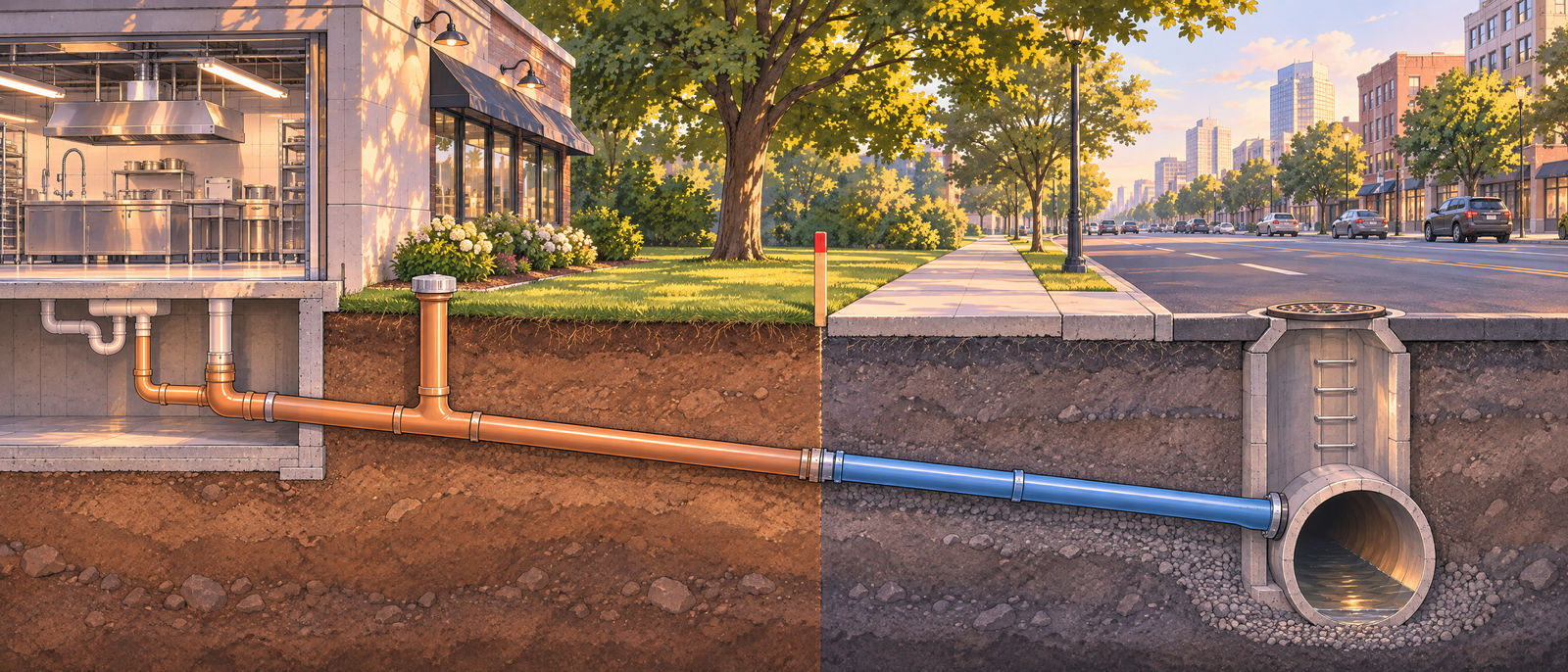
In Toronto, if a sewer backs up, Toronto Water will camera inspect the City-side portion through a cleanout. If the City side is clear, the problem is on the private side and the owner calls a licensed plumber. If the building has no proper cleanout, the City will ask the owner to install one before it can investigate. A camera inspection with locating shows exactly where a defect sits relative to the property line, which settles who pays.
Inside the property, responsibility is split again between owner and tenant by the lease, or between corporation and unit owners by the declaration in a condominium. Building drains are usually a landlord or corporation responsibility. Our guide to condo plumbing responsibility explains that split.
How a sewer camera inspection works on site
Access. The plumber opens the main cleanout. If there is no usable cleanout, one may need to be installed, or the camera can go in through a roof vent or a fixture, with less reach.
Clear the line if needed. A line full of water or debris hides the pipe walls. It may be cleared or jetted first.
Run the camera from the cleanout toward the street, recording continuously and noting distance on screen.
Locate. At each defect and at the property line, the plumber locates the sonde from the surface and marks the position and depth.
Report. You get the recording, a written report and the plumber's recommendation.
Most single-line inspections are completed in one visit. Larger sites with several building drains, catch basins and laterals take longer and are best scheduled as a planned survey.
What happens after the inspection?
The findings decide the next step:
Clean and monitor. Grease, scale and fine roots are handled with drain cleaning or jetting, then a follow-up inspection on a schedule.
Spot repair. A single broken section, offset joint or root entry point can often be excavated and replaced on its own, using the locate marks so the dig is no bigger than needed.
Rehabilitate or replace. A line with defects along its length needs a larger fix. The industry options include excavation and replacement, and trenchless methods such as cured-in-place lining or pipe bursting where the pipe and site suit them. The inspection video is what lets a contractor quote this accurately.
Whatever the recommendation, the camera footage means you are deciding on what is in the ground, not on a guess.
Sewer camera inspection with Elevate Plumbing
Elevate Plumbing, a division of Elevate Service Group, camera inspects and locates building drains and sewer laterals for property managers, commercial owners, condo corporations and tenants across Kitchener-Waterloo, Cambridge, Guelph, London, Hamilton, Toronto and the rest of Southwestern Ontario and the GTA. The crew is based in New Hamburg. You get the recording, a written report and a clear recommendation, and if the line needs work we quote the sewer line repair or replacement on what the footage shows.
For portfolios, scheduled camera inspections of known problem lines can sit inside a commercial plumbing maintenance contract, backed by Elevate Service Group's network of more than 130 technicians across plumbing, electrical and facility services.
To book an inspection, tell us the property type, the problem or the reason for the inspection, and where the cleanout is if you know, through the contact page.
Frequently asked questions
What is a sewer camera inspection?
It is a video inspection of the inside of a sewer or building drain using a waterproof camera fed through a cleanout. The plumber records the full line, locates any defects from the surface with their depth, and gives you the recording and a written report.
Is a sewer camera inspection worth it?
For a commercial or multi-unit building, yes, before a lease or purchase, when a line keeps backing up, before jetting old pipe, before paving over the line, after a flood, and for capital planning. It costs far less than an emergency excavation and lets you plan repairs instead of reacting to them.
How long does a sewer camera inspection take?
Most single-line inspections are done in one visit. Sites with several building drains, catch basins or long laterals take longer, and lines full of debris may need cleaning before the camera can see the pipe walls.
How often should sewer lines be inspected?
There is no legal schedule for private sewer lines. Inspect lines with a history of backups after each cleaning, older cast iron and clay lines every few years, and any line before a lease, a purchase, a change of tenant use or new paving.
What does a sewer camera inspection report show?
The location and type of every defect found, such as roots, grease and scale, sags, offset joints, cracks, corrosion, infiltration or broken sections, with distances from the cleanout and depths from the surface, plus the video recording and a recommendation.
Who is responsible for the sewer line, the city or the property owner?
In most Ontario municipalities, including Toronto and Waterloo, the city is responsible from the main to the property line and the owner from the property line into the building. Inside the property, the lease or the condominium declaration decides between landlord and tenant or corporation and owners.
What is PACP?
PACP is the Pipeline Assessment Certification Program from NASSCO, the standard system for coding defects found in sewer CCTV inspections, used across Canada. A PACP-coded report uses consistent defect names and grades, which makes inspections easier to compare over time.
Tags:
Author

Elevate Plumbing Team
Elevate Plumbing is a division of Elevate Service Group.
Leave a comment
This will be publicly visible.
Your email address will not be published.
Your comment will be reviewed by an admin before it is published.